Original

Igbo names and spellings for various settlements
Abakaliki is Abankaleke; Afikpo is Ehugbo; Awgu is Ogu; Awka is Oka; Bonny is Ubani; Enugu is Enugwu; Ibusa is Igbuzö; Igrita is Igwuruta; Oguta is Ugwuta; Onitsha is Onicha; Owerri is Owere; Oyigbo is Obigbo... any more will be added.
Showing posts with label Ichi. Show all posts

Wednesday, November 6, 2019

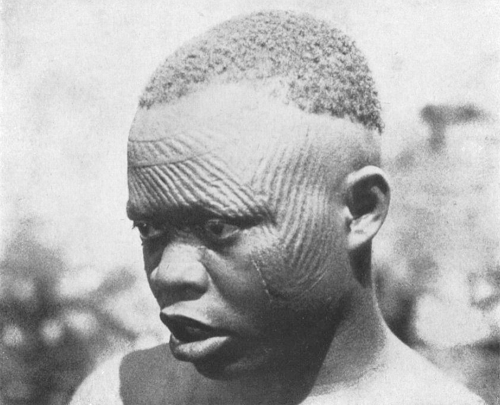
Ezeani Obidigbo of Neni

"Chief Obudugbo. Ezeana of Neni" [Ezeani Obidigbo of Ugwudunu, Neni?]. Photographed by Northcote Thomas, c. 1910-11. MAA Cambridge.

The keepers of Ani (Ala), the shrine of the Earth Mother, are usually the autochthonous section of a community, a group that can trace their patriline to the original settlers of a community. Ndị nwe Ànà are the highly respected and revered spiritual leaders of a community due to the supremacy of Ani in Igbo society. To keep the Ani is to keep the laws of the land.

Various communities have their own personal Ani because of their unique relationships with Ani and the work in setting up the shrine.

Sunday, November 4, 2018

Mgburuichi - Bruchee - Breechee

An mgburuichi, an Igbo person with ichi marks associated with Nri. Northcote Thomas, Museum of Archaeology and Anthropology, Cambridge. Igbo people were the largest group among people who had escaped enslavement on plantations in Jamaica, mgburuichi were known as 'Bruchee.'

"They were respected throughout Igboland. We have facial marks (ichi) that distinguish us from other Igbo people, and this served as a passport, enabling us to travel unharmed at a time when human beings were essential commodities. People with ichi marks were regarded as Nri men, and were not enslaved. It was probably because of this that some parts of Igboland started to wear ichi."
A 'runaway' advertisement from Jamaica, requesting the capture of escaped enslaved people for a reward in return, noted is an "Eboe man, with the Breeche cut on his forehead," this is an mgburuichi, an Igbo man with ichi marks likely from today's Anambra State. From a compilation of 18th century advertisements for escaped enslaved people in Jamaica. There are over 100 Igbo (Eboe) people listed.
The fact that Igbo "Breechee" show up in Jamaica among runaways from 1777-1793 is significant. It is a concrete sign that the trans-Atlantic slave trade had reached all the way to the Nri heartland in the Anambra valley of northern Igboland, and that by the 1770s (if not earlier) the social violence wrought by slaving and the agawhu (merchant-warlords) was violating even the ancient sacred authority—and the personal safety—of titled "Nri men," who no longer were preserved from capture or kidnapping and enslavement.
– Douglas B. Chambers. "The Igbo Diaspora in the Era of the Slave Trade."

Thursday, February 26, 2015

Ichi Marks


Igbo youth with solar/lunar ichi marks. The marks are made to look like sun rays and also represent the moon. In Igbo the lines are called ogba ’farm furrows’. Early 20th century, Photo by MDW Jeffreys.

Location: ?Unsure?, Alaigbo | Date: ?Unsure?, Before 1920 | Credit: Jeffreys