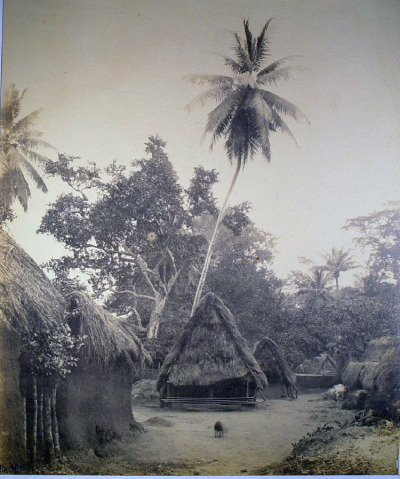
Location: ?Unknown? [possibly, Aro] | Date: Early 20th century | Credit: ?Unknown?
The pre-1940s history, indigenous culture, and heritage of Ìgbò through images.
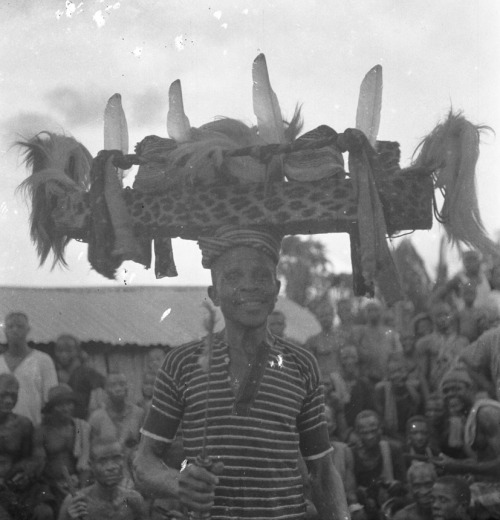
[Igbo] Ohafia war dance The [Igbo] Ohafia war dance iri agha. Adult male carrying a headhunters trophy (oyaya) on his head. The trophy is a rectangular shaped wooden frame decorated with feathers, leopard fur, cloths and animal fur at either end. He is wearing a striped shirt, and holding a ?metal rod in one hand. Behind him is a crowd of people and a Building with corrugated iron roof.— Jones, G.I. 1932 - 1939 Location: Ohafia, Alaigbo | Date: 1930s | Credit: Jones
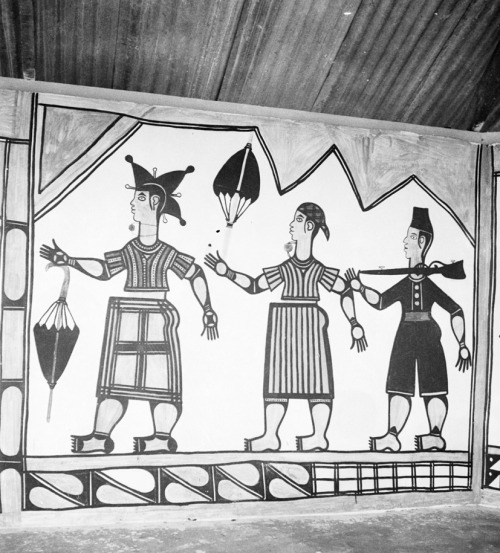
Wall paintings in Okwu village painted by an Anang artist in the style of Ngwomo ghost houses.— Jones Location: Okwu, Alaigbo | Date: 1930s | Credit: Jones
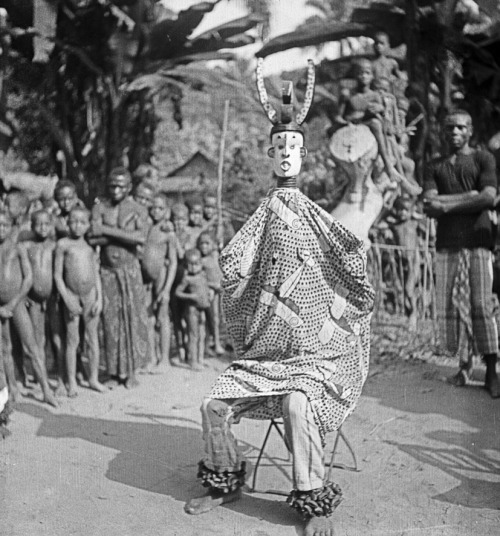
[Igbo] Rumuji Owu play with the character of Oterivinwe sitting on a chair. The masquerader is wearing a wooden, beautiful female, white face mask with two horns attached to the top. The neck is coiled and attached to the mask is a print cloth. The masqueradere is wearing white cotton trousers and seed anklets around the ankles. In the background are spectators and vegetation.Location: Rumuji, Alaigbo? | Date: 1930s | Credit: Jones

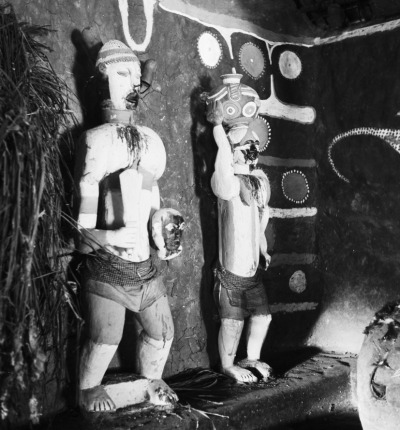
Interior of Igbo Mbari house. Sculpture in foreground representing adult male riding animal, second adult male standing in front of animal.Location: ?Unknown?, Alaigbo | Date: ?Unknown? | Credit: Edward Chadwick
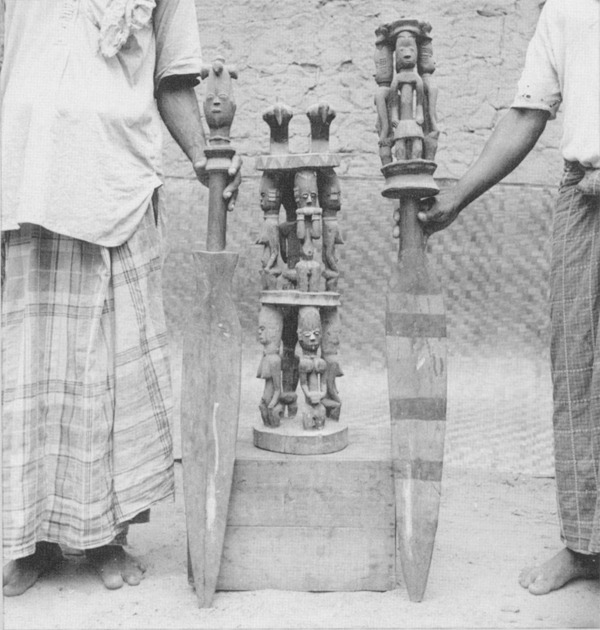
A Nwammuo [of the Ogume Ika-Igbo (now in Delta State, Nigeria] was a trophy used in a dance or play of the same name. It consisted of groups of little human figures arranged in tiers one above the other. The one I photographed [the photo attached] was two-tiered, with four figures in each tier, and surmounted by two birds, but Ufere was said to have carved Nwammuo with up to four tiers and sixteen figures. I gathered that the principal dancer would carry the trophy on his head and a paddle in his right hand, and that the others (who could be both men and women) would dance in a circle around him. [Nwammuo means ‘ghost-spirit child/offspring’ in Igbo]A Visit to Ogume in 1937, by G. I. Jones.
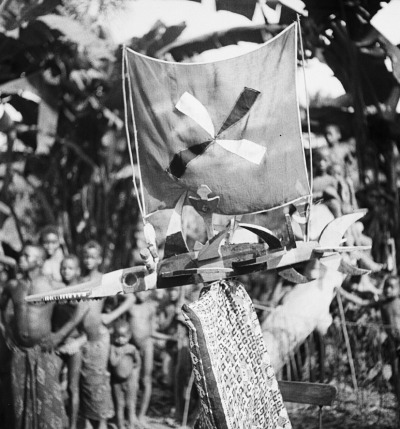
Rumuji Owu play, the character is Abam (one who has visited placeds and learnt things) and the figure represents a fierce fish spirit. The headpiece is a long horizontal carved piece with a pointed head depiciting sharp incised teeth, round eyes, and fins on the sides and top. The headpiece is painted in different colours. On top of the carving is a square cloth panel (like a sail) that has four pieces of cloth sewn in the centre. The masquerader is draped in block printed cotton cloth. In the background are spectators.— G.I. Jones
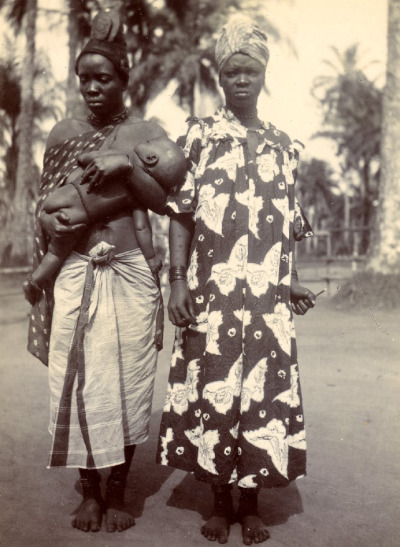
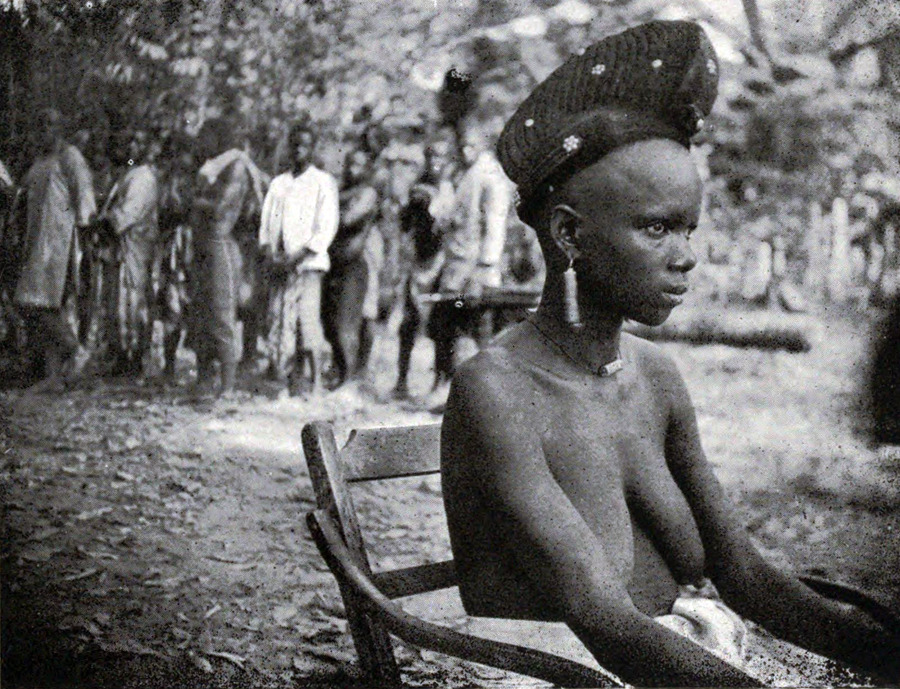
24 Feb 1905. Ikot-ekpende. [Aro-Igbo] bride and her mother. [In Ibibio territory where the Aro (originally from Arochukwu from what is now Abia State Nigeria, but settled all over eastern Nigeria) were known as Inokun, now Akwa-Ibom State, Nigeria]— Charles Partridge
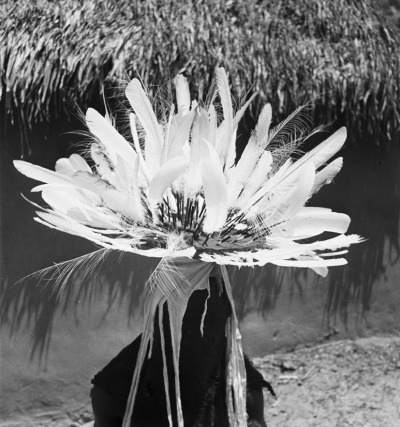
A Ngbagba Ikoro masquerade with a close up view of Otiri, the principle masquerade character. The mask of Otiri consists of a circular base with layers of white feathers adorning it; the head is shrouded in a woven cloth. In the background is a thatched building.— G. I. Jones, 1930s.