Original

Igbo names and spellings for various settlements
Abakaliki is Abankaleke; Afikpo is Ehugbo; Awgu is Ogu; Awka is Oka; Bonny is Ubani; Enugu is Enugwu; Ibusa is Igbuzö; Igrita is Igwuruta; Oguta is Ugwuta; Onitsha is Onicha; Owerri is Owere; Oyigbo is Obigbo... any more will be added.

Sunday, November 24, 2019

Enuani Lady

A young Igbo woman from Onicha Olona, or surrounding settlement, c. 1912-13. Onicha Olona is an Enuani settlement, an Igbo population west of the Niger River. Many of these settlements were founded by migrations from east of the Niger River (Oshimili) hundreds of years ago. These settlements came into much contact with the Edo and Igala. The Benin Empire especially influenced their political structures and even populations, particularly after the conquering 15th century Oba, Oba Ewuare.

Dogs

The other citizens, dogs from the past around the Lower Niger River area, c. 1890s–1930s. MAA Cambridge / RAI / British Museum.

Wednesday, November 20, 2019

Igbo Landscaping and Architecture

A building photographed in the western Igbo area, filed under Onicha Olona by the MAA Cambridge, but may be another surrounding Igbo town. The trees and shrubs appear to have been planted in an order. Photographed by Northcote Thomas and assistants, c. 1912-13.

Wednesday, November 13, 2019

A View of the Arọ̀ from Igbere

Before the Europeans came, the Arọs […] main interest in their trade was the purchase of slaves. […] Some of them came as medicine men, […] traders […] agents of Ibìna Ụ̀kpaàbị̀. We called them Ọbụ̄ Arọ̀ bụrụ Ìgbò (He is Arọ as well as Igbo), […] Arọ̀ Oke-Ìgbò, […] Inokun. […]

Igbo Kitchenware

Igbo kitchenware, from Ögbü (Awgbu), in today's Anambra State, taken into the collection of British colonial anthropologist Northcote Thomas, c. 1910-11; Igbo names recorded in his notes as: top left, "okwa mai [ọkwa maị]," palm wine cup; top right, "Ngagis 2 Spoons for eating [ǹgàjì];" bottom, "oku mma [ọ̀kụ̀ may refer to the word for dish, mma meaning fine (as in special dishes).] ... for soup" MAA Cambridge.

Monday, November 11, 2019

Ndị Ìgbò

An unidentified group portrait taken by a Royal Niger Company employee c. 1886 - 1895. Based on other photos, these could be people from the Asaba or Önïcha area. MAA Cambridge.

Wednesday, November 6, 2019

Ezeani Obidigbo of Neni

"Chief Obudugbo. Ezeana of Neni" [Ezeani Obidigbo of Ugwudunu, Neni?]. Photographed by Northcote Thomas, c. 1910-11. MAA Cambridge.

The keepers of Ani (Ala), the shrine of the Earth Mother, are usually the autochthonous section of a community, a group that can trace their patriline to the original settlers of a community. Ndị nwe Ànà are the highly respected and revered spiritual leaders of a community due to the supremacy of Ani in Igbo society. To keep the Ani is to keep the laws of the land.

Various communities have their own personal Ani because of their unique relationships with Ani and the work in setting up the shrine.

Tuesday, October 29, 2019

Near Nnewi

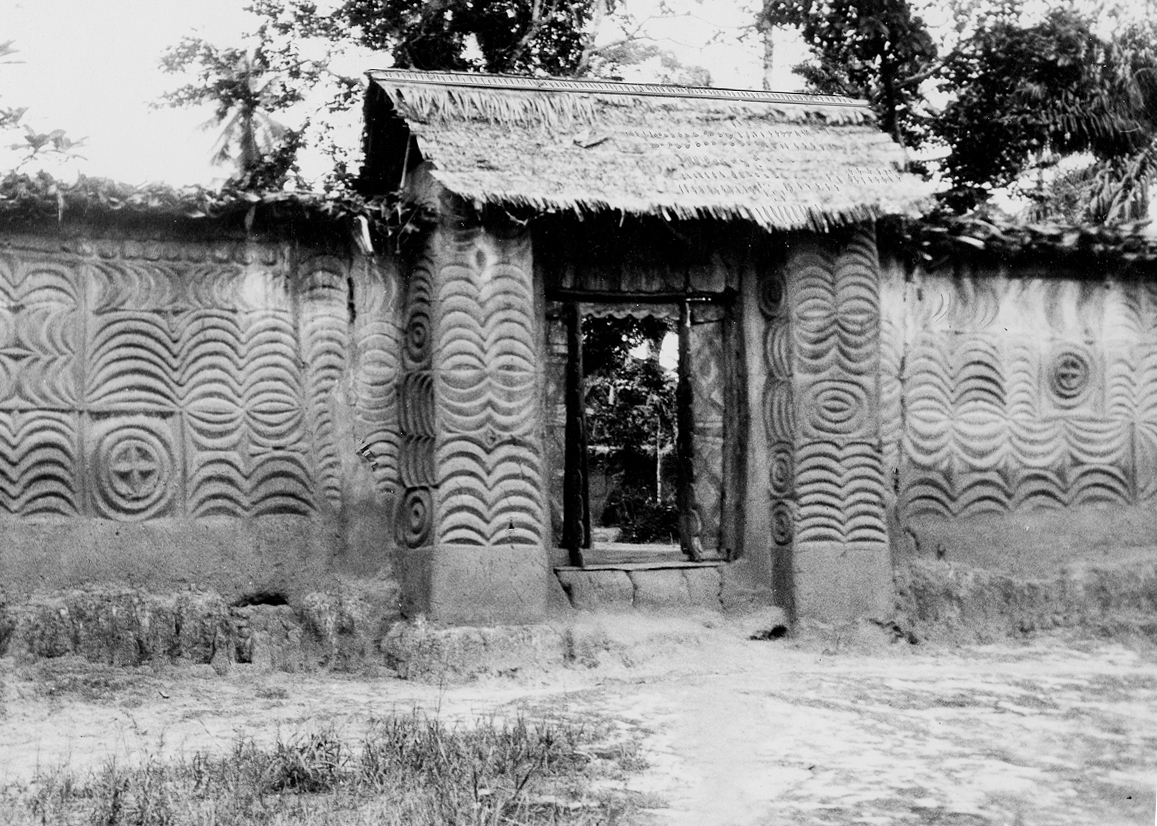
Entrance gate and walls with relief of a farmer's compound at Nnewi (noted as "Entrance to a compound of IGBO farmer's house near NEWI"), northern Igbo area, c. 1938. Photo: Edward Duckworth. Pitt Rivers Museum.

Sunday, October 27, 2019

Ụ̀banị̀

"Water play Bonny For Oko Jumbo" – Jonathan Adagogo Green (Ibani photographer). 1895-1905. British Museum.

Bonny was a powerful coastal state and major port during the slave and palm oil trade. Bonny, Ibani, known as Ụ̀banị̀ in the Igbo interior, set on trading expeditions into the creeks with dozens of canoes holding up to 120 people each. During the slave trade, a group of Bonny slaving canoes could reportedly carry back up to 2000 people from the interior. The creeks were major highways for trade. The Ụ̀banị̀ people brought European cloth and other goods such as gin, pomade, and other European-made drinks to the traders in the interior.

Friday, October 25, 2019

Ụ̀kwà

"At the Akquete [Akwete] Market" by Jonathan Adagogo Green, an Ibani (Bonny) photographer, 1895-1905. British Museum. The Ndoki (which Akwete is a part), Asa, and Omuma area is collectively referred to as Ụ̀kwà, which apparently means wealth.

Before the 20th century, this area was a major market area including the Ohambele, Ohanku, Azumini, and Akwete markets that served as meeting points for Igbo groups and coastal middlemen, especially the Ubani or Ibani (of Bonny Island) who brought up European goods to be traded.

Sunday, October 13, 2019

Òmenàlà

Symbol of Ala, the Earth Mother, among the Eda Igbo, present-day Abia or Ebonyi State. P. A. Talbot, c. 1920s.

Most Igbo people in the past did not perceive themselves as belonging to a religion. The split between culture and religion did not exist. All practices were viewed as duty. This view of duty, compulsory rites that place tradition and service and reverence to ancestors over belief itself, still exists in the kola nut rite, ịche ọjị, for example, which could've been classed as a religious rite.

Tuesday, October 1, 2019

Interview of an Ọ̀kọ̀nkọ̀ priest born in c. 1880s Umuopara

This is likely Nwa Agụ, in Umuahia, the leopard Ọ̀kọ̀nkọ̀ mask worn by high ranking men as the emblem of the society. The costume's chequers represent leopard spots. The masker is signing (nsibidi?). Photo: G. I. Jones, c. 1930s. MAA Cambridge.
Uwaga Okeanya, aged c.90 (an Ọ̀kọ̀nkọ̀ priest), in Ogbodiuumwu [Ogbodiukwu?], Ụmụọpara, 12 August 1972